


How much does state regulation matter for employment and wages? James Bailey and I take up that question in a recent Center Square column, drawing on our study of 87 industries from 2016 through 2024.
The headline finding: a 25 percent reduction in state regulatory restrictions is associated with 4.4 percent higher employment growth. For the average state, our estimates imply cutting red tape by 25 percent would create roughly 10,000 additional jobs over the study period.
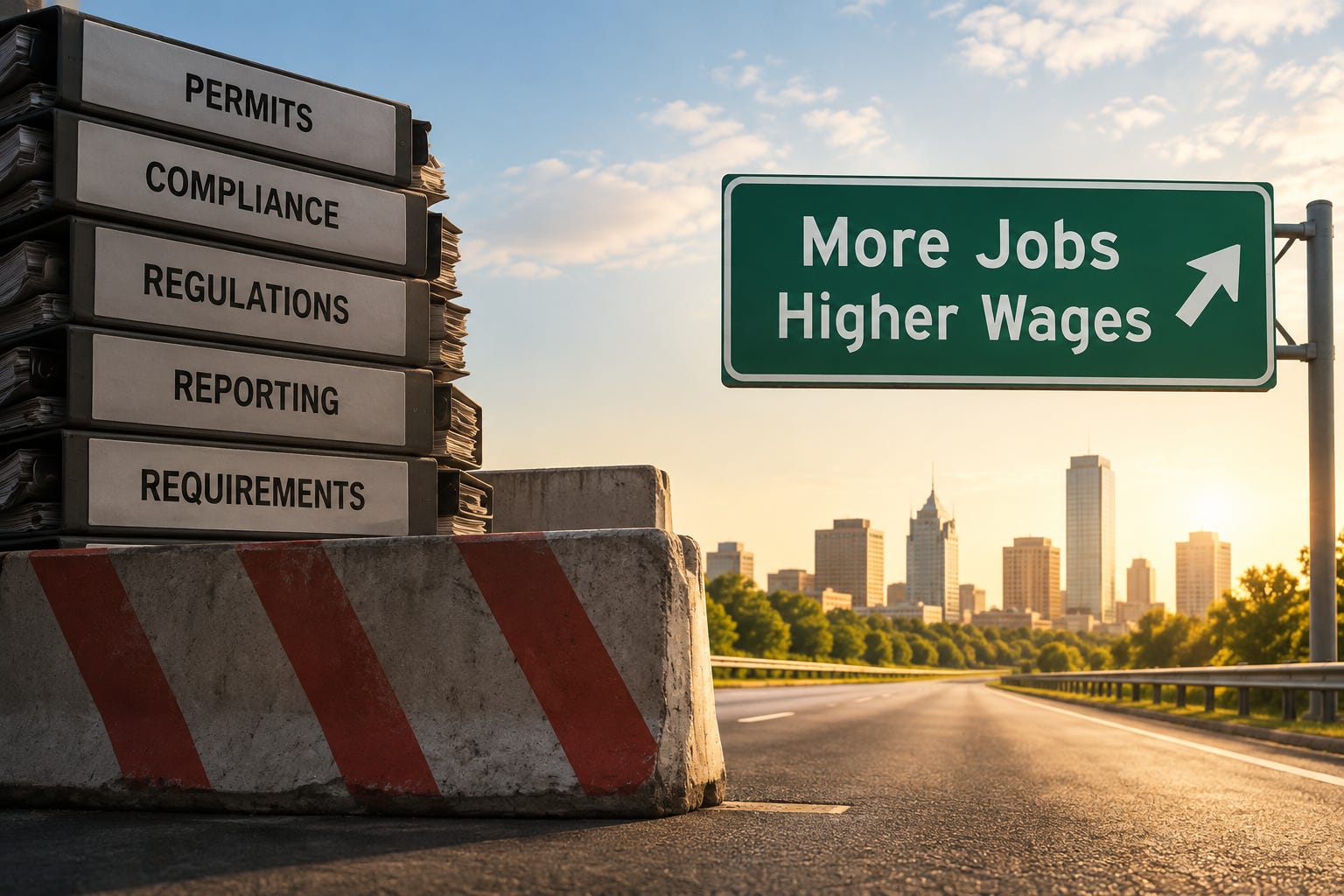
Wages tell a similar story. A doubling of the regulatory restrictions facing an industry is associated with an 8.8 percent decline in employment growth and a 5.7 percent decline in wage growth. Those figures describe differences in growth—not equivalent percentage declines in the total number of jobs or the level of wages.
We use State RegData to measure the restrictions facing each industry, then examine how changes in those restrictions within a state relate to employment and wage growth the following year. And while a doubling is a large change, smaller shifts were common: 12 states increased their average industry-level restrictions by at least 25 percent during the period we studied, while nine reduced them by at least that much.
While I’ve written in the past about the relationship between regulatory accumulation and economic growth, this new research offers evidence about the relationship between state-level regulatory accumulation and growth in jobs and pay. It’s not surprising to see the negative relationship, given what we already knew about regulations and economic growth overall, but it is useful to attach some specific numbers to jobs and wages effects.